
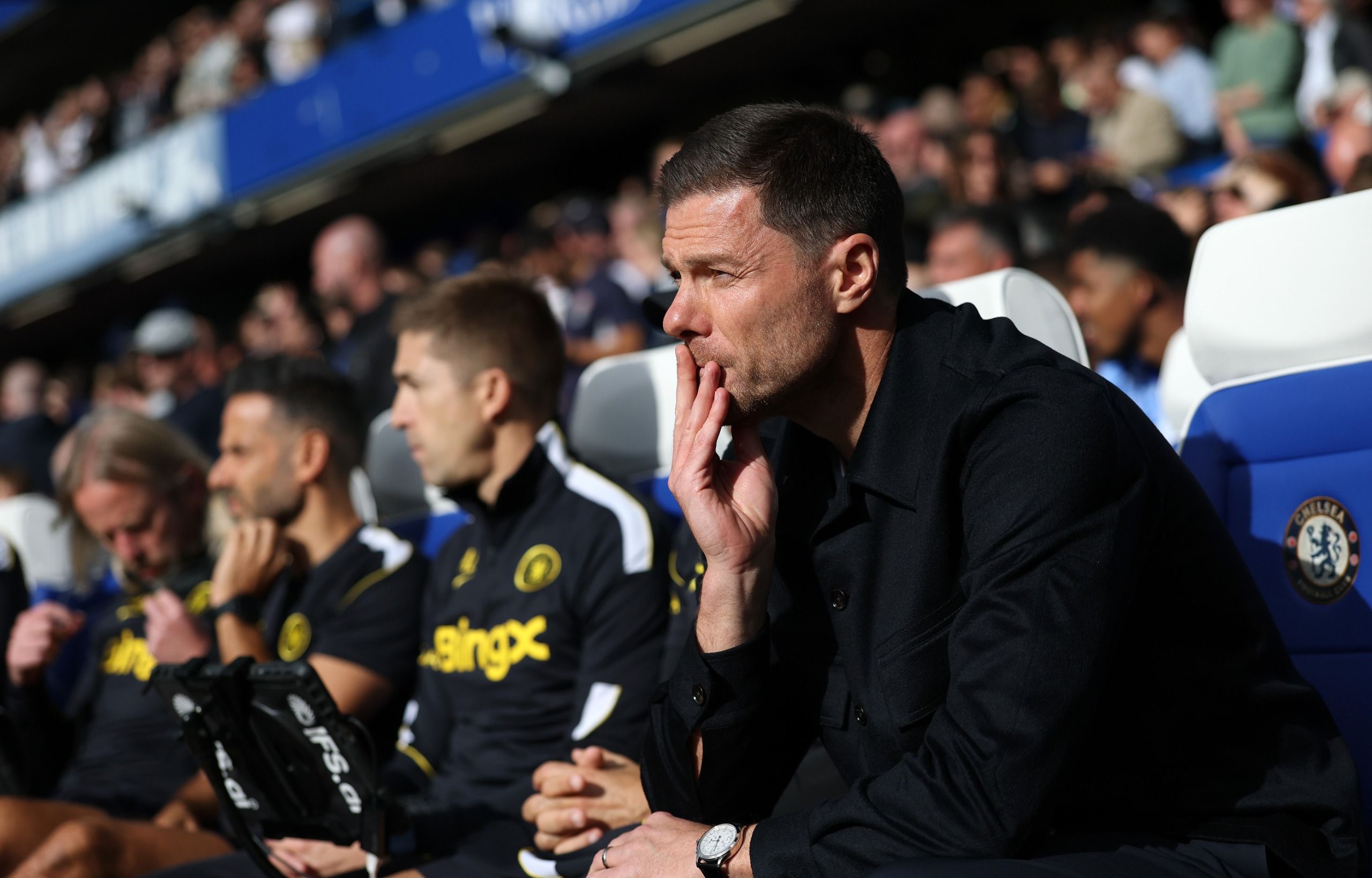
Xabi Alonso needs a transitional year at Stamford Bridge, but his tactical overthinking is compounding deep squad instability.
Chelsea are currently engulfed in a severe identity crisis following years of erratic spending, bottom-half finishes, and constant squad churn under their ownership. The club brought in world-class manager Xabi Alonso to provide much-needed stability, order, and calm to a chaotic environment at Stamford Bridge.
However, rather than simplifying the approach for a young and tangled-up squad, Alonso has introduced unnecessary complexity and erratic tactical setups across the current Premier League campaign. This early-season turbulence has left the team struggling to find a consistent rhythm, according to information published by FF2 Futebol.
The situation reached a critical point during recent fixtures, where unusual tactical experiments in defense and midfield disrupted team shape and player roles. To steady the ship, the coaching staff must return to straightforward patterns and consistent selections to help these young players develop properly.
Xabi Alonso tactical instability in the Premier League
In his first nine Premier League matches at the helm, Xabi Alonso has utilized six different combinations in defense alongside five different midfield pairings. This constant tinkering prevents the squad from establishing vital chemistry on the pitch.
Notable experiments include a strange Henderson and Barco pivot during the defeat at Brentford, followed by an even more unusual strikerless 4-4-2 formation in a 2-0 loss against Tottenham Hotspur, exposing glaring vulnerabilities.
Cole Palmer role confusion against Manchester United
During the first half of the match against Manchester United, Chelsea looked like a complete shambles due to the strange positional usage of star player Cole Palmer. Palmer kept dropping deep to form a flat line across the midfield, which inadvertently removed all forward-passing options.
This deep positioning caused passing lanes to close and left the team lacking verticality. Consequently, possession was repeatedly lost in the center of the park, fueling a chaotic, end-to-end game with dangerous transitions for Manchester United.
Tactical correction brings victory at Stamford Bridge
Recognizing his tactical error at halftime, Alonso abandoned the experimental setup and reverted to a far more conventional 4-2-3-1 formation for the second half. This simple adjustment immediately stabilized the side.
Palmer was pushed into a higher position, allowing him to slice passes through the lines with ease. Manchester United could no longer cope with the renewed attacking shape, and Chelsea ultimately strode to a comfortable victory.
Lessons for Chelsea in the transitional season
There is a glaring lesson for Alonso moving forward as he navigates this crucial transitional period at Stamford Bridge. His young players need a firm hand, consistent team selection, and simple patterns to learn how to play effectively.
Having spent recent years charging around in circles amid corporate and structural chaos, these athletes need to be taught the basics. Simplifying the tactical approach is the only way to help them walk before they attempt to run.
Frequently Asked Questions
Why is Xabi Alonso facing criticism at Chelsea?
Xabi Alonso is facing criticism because his tactical overthinking and constant experimentation with lineups have contributed to ongoing instability on the pitch at Stamford Bridge.
How did Cole Palmer struggle in the first half against Manchester United?
Cole Palmer dropped too deep into the midfield during the first half, which eliminated forward-passing options and caused a chaotic, turnover-heavy match.
What tactical formation solved Chelsea issues against Manchester United?
Alonso corrected his setup at halftime by shifting to a conventional 4-2-3-1 formation and pushing Palmer higher up the pitch, securing a victory.
How many defensive combinations has Alonso used in the Premier League?
In his first nine Premier League matches, Xabi Alonso deployed six different defensive combinations and five different midfield pairings.
