
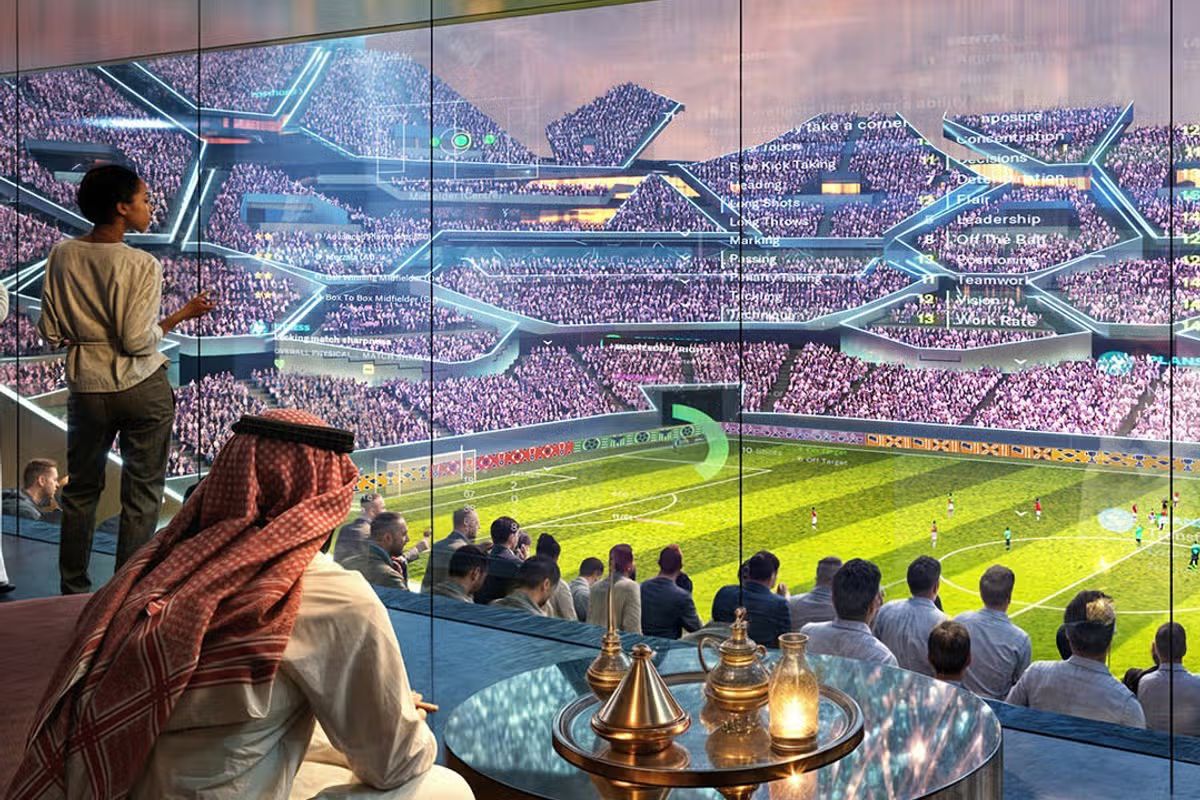
The ambitious NEOM Stadium project is cancelled, raising serious questions about the 2034 World Cup infrastructure.
Saudi Arabia has officially scrapped plans to build the iconic NEOM Stadium, a futuristic stadium in the sky originally intended to serve as a centrepiece for the 2034 World Cup. The 46,000-seater ground was envisioned to sit 350 metres above ground level, integrated directly into the roof of the planned smart city known as The Line.
The cancellation of this architectural marvel comes after the Middle Eastern nation was awarded the rights to host the 25th World Cup by FIFA president Gianni Infantino in 2023. With the tournament fast approaching, the removal of the marquee venue casts significant doubt on the country's broader infrastructure promises for the global event, according to information published by FF2 Futebol.
Originally announced in 2021 by Saudi ruler Mohammed bin Salman, The Line project has faced severe criticism regarding unrealistic costs, timelines, environmental damage, and human rights violations. Despite approximately $50 billion already being pumped into the development, the recent updates indicate that the flagship NEOM Stadium will not be built at all, leaving planners to rely on alternative venues.
The Vision Behind The Line City Project
Announced by Mohammed bin Salman, The Line was designed as a sci-fi-esque smart city measuring 200 metres wide and 110 miles long. The futuristic metropolis was planned without cars or streets, featuring an entirely glass mirror exterior and basic services within a five-minute walking distance.
Marketed as a living laboratory and a new model for livability, the urban project has nevertheless drawn intense scrutiny. Reports highlight that thousands of individuals have been displaced, while migrant workers reportedly faced labour conditions stretching way beyond international minimum standards.
Controversy Surrounding the 2034 World Cup Bid
The path to the 2034 World Cup has been mired in controversy since FIFA granted hosting rights to Saudi Arabia. The international governing body effectively ruled out potential bidders from Europe, Africa, and South America by giving opening matches of the 2030 tournament to Argentina, Paraguay, and Uruguay.
Furthermore, FIFA announced a tight window of just 25 days for interested nations to express their intent to host the 2034 event. Saudi Arabia capitalized on this rapid timeline, announcing its official bid within minutes of the opening window.
Remaining Stadium Infrastructure Plans
Despite the cancellation of the high-profile venue, the original Saudi bid featured a total of 15 stadiums, with only four having been constructed at that point. Major developments remain underway across the nation to support the massive influx of football fans.
Other proposed venues include the King Abdullah Economic City Stadium, Jeddah Central Development Stadium, ROSHN Stadium, New Murabba Stadium, Qiddiya Coast Stadium, Aramco Stadium, Prince Mohammed bin Salman Stadium, South Riyadh Stadium, and King Salman International Stadium.
Frequently Asked Questions
Why was the NEOM Stadium cancelled?
The NEOM Stadium was scrapped due to mounting concerns over unrealistic costs, timelines, and the overall feasibility of integrating the 46,000-seater venue into the complex roof of The Line city project.
Who awarded the 2034 World Cup to Saudi Arabia?
FIFA awarded the hosting rights for the 2034 tournament to Saudi Arabia after a controversial bidding process overseen by FIFA president Gianni Infantino.
What is The Line in Saudi Arabia?
The Line is a futuristic smart city project announced by Mohammed bin Salman, designed to stretch 110 miles long with an entirely glass mirror exterior, no cars, and all essential services reachable within a five-minute walk.
How many stadiums were in the original Saudi World Cup bid?
The original bid by Saudi Arabia featured 15 stadiums, with only four facilities having been constructed at the time of the announcement.
