
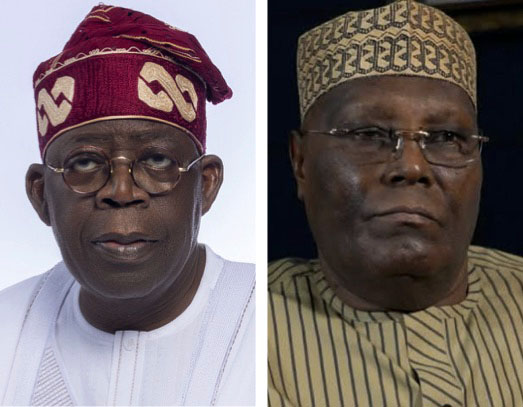
Political divisions emerge across northern Nigeria as APC leaders mobilize support for President Tinubu amid economic hardship.
Political tensions are rising across northern Nigeria as leaders and citizens divide their loyalties between President Bola Ahmed Tinubu and former Vice President Atiku Abubakar ahead of the 2027 general elections. The intense political tug-of-war highlights deep regional complexities involving governance and economic concerns.
The resistance against President Tinubu's re-election bid stems largely from ongoing economic hardship, alongside grievances regarding the distribution of federal appointments and infrastructure projects across the North-West, North-East, and North-Central zones, according to information published by The Sun Nigeria.
Despite these mounting hurdles, ruling party officials are intensifying grassroots mobilisation efforts to secure a second term for the administration, while opposition figures leverage local grievances to strengthen their regional political influence.
Economic Hardship and Atiku Influence Challenge APC Mobilisation
Ruling party sources reveal that mobilisation efforts by governors and senior officials have yielded uneven results due to widespread public anxiety over the rising cost of living. Complaints concerning federal appointments and infrastructure have further complicated attempts to broaden the president's support base.
Former Vice President Atiku Abubakar remains a formidable challenger whose longstanding political relationships and appeal among sections of the northern electorate continue to pose significant challenges to the ruling party across the three northern zones.
Kaduna APC Insists Region Owes Support to President Tinubu
In contrast to opposition momentum, the Kaduna State chapter of the ruling party insists that northerners owe President Tinubu their unflinching support. Publicity Secretary Mohammed Sani Haruna cited the president's historical backing of northern presidential contenders since the early 1990s.
Haruna recalled Tinubu's political alliances with the Peoples Front led by the late General Shehu Musa Yar'Adua, as well as his support for Atiku in 2007, Nuhu Ribadu in 2011, and Muhammadu Buhari in 2015, proving his sustained commitment to the region.
Voters Will Prioritize Development Over Regional Politics
Dr Iliyasu Musa Kwankso, an APC chieftain and Director of Finance at the Hadejia Jama'are River Basin Development Authority, argued that ethnic and regional appeals will have diminishing influence during the upcoming 2027 presidential elections.
Kwankso maintained that northern voters are now more conscious of governance and tangible development, pointing to ongoing trillion-naira federal projects and the continuation of inherited infrastructure as concrete proof of the administration's dedication.
Frequently Asked Questions
Why is President Tinubu facing political resistance in northern Nigeria?
President Tinubu faces resistance in parts of the North due to economic hardship, the rising cost of living, and grievances regarding federal appointments and infrastructure distribution across the northern zones.
What role does former Vice President Atiku Abubakar play in the 2027 political landscape?
Atiku Abubakar remains a formidable political challenger in northern Nigeria, leveraging his longstanding relationships and appeal across the North-West, North-East, and North-Central regions to rally support.
How is the Kaduna State APC responding to the political challenges?
The Kaduna State APC is actively mobilising support, pledging two million votes for President Tinubu, and arguing that the region owes him backing because of his historical political alliances with northern leaders.
Are northern voters shifting toward development-focused politics?
APC chieftains like Dr Iliyasu Musa Kwankso argue that northern voters are increasingly prioritising tangible infrastructure development and governance over ethnic or regional sentiments.
