
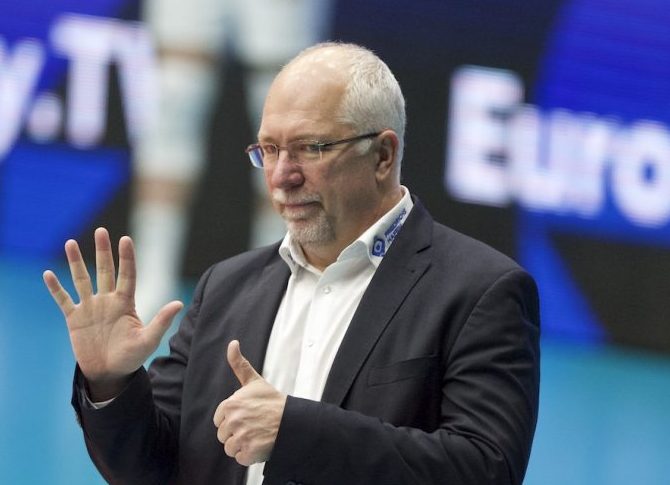
Experienced coach Mark Lebedew explains eye calibration, visual lag, and why attackers misjudge the block.
In men's volleyball, managing competition and disputed calls during practice changed dramatically with the introduction of the video challenge system in 2014, according to information published by volley.
Coach Mark Lebedew explains that this technology provided a much-needed reference point on stadium LED screens, proving that human eyes had been misjudging whether volleyballs were in or out.
Building on years of observing elite attackers in Poland, Germany, and international competition, Lebedew analyses how visual perception directly affects spiking success and why players often make critical miscalculations.
How Video Challenges Calibrated Human Eyes
Before video challenge systems, arguments over in and out calls were a daily routine for coaches and players alike. Nobody possessed a reliable reference point to determine the exact landing spot of a fast-moving volleyball during intense rallies.
Once the technology began replaying close calls on stadium screens, players and coaches quickly learned to calibrate their eyes. This visual adjustment drastically reduced practice arguments and revealed underlying flaws in how athletes process visual data.
Why Elite Attackers Misjudge the Block
Lebedew highlights unusual player behaviours, such as a 2.08m attacker with a 3.70m spike reach who regularly hit into the net. This athlete was simply waiting for the block to come into view, losing his natural height advantage entirely.
Another player with a 3.60m reach routinely hit into a much shorter blocker. This error occurred because the athlete attacked where the block was located initially, failing to account for the physical movement of the block during the visual lag time.
Top level players frequently talk to blockers after an attack to cross-reference what they saw with reality. Because the block moves dynamically, the obstacle the attacker hits is rarely identical to the static image captured by their eyes moments earlier.
The Dangers of Spiking Past the Block
Attempting to spike past the block often forces exceptionally tall players to hit overly sharp angles into the net. Lebedew suggests these athletes would achieve better results by ignoring the block completely and targeting specific zones on the court.
Without proper eye calibration, players rely on outdated visual information. Accounting for block movement and court dimensions, such as aiming for specific points on a back wall during training, helps athletes develop effective workarounds.
Frequently Asked Questions
Why did volleyball players constantly argue about in and out calls before 2014?
Before video challenge systems arrived in 2014, players and coaches lacked a reliable reference point to determine if a ball landed in or out, causing widespread visual misjudgements.
Who is Mark Lebedew in professional volleyball?
Mark Lebedew is a seasoned professional volleyball coach who has managed top teams in Poland, Germany, Belgium, and Italy, alongside leading national teams for Australia and Slovenia.
Why do top attackers talk to blockers after hitting?
Elite attackers ask blockers for feedback to cross-reference their visual perception with actual events, helping them calibrate their eyes against the movement of the block during the lag time.
What did player M experience during attacks?
Player M was so tall at 2.08m that he could not see the block, causing him to wait unnecessarily and hit into the net while trying to find a sharp angle around an invisible obstacle.
