
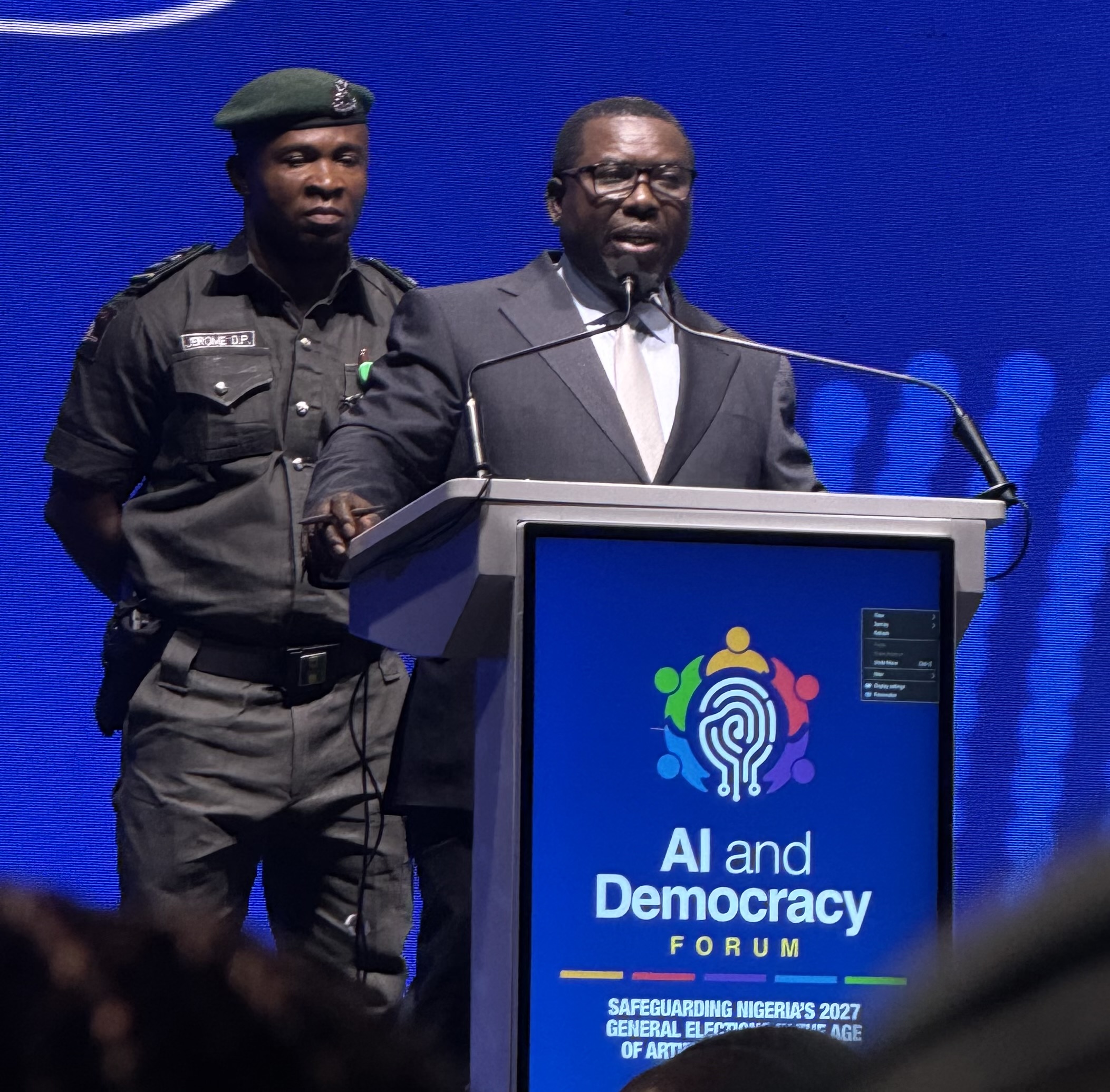
INEC Chairman Prof. Joash Amupitan vows algorithms will not decide the 2027 elections amidst deepfake and AI threats.
Artificial intelligence will not be allowed to determine the outcome of Nigeria's 2027 general elections, according to a strong declaration made by the Independent National Electoral Commission. Prof. Joash Amupitan issued the warning during an event in Abuja.
Speaking at the AI and Democracy Forum 2026 organized by YIAGA Africa, the electoral chief stressed that deepfakes, fabricated audio, and coordinated disinformation pose severe threats to electoral credibility across the nation, according to information published by The Sun Nigeria.
The electoral commission aims to deliver credible polls for 103 million registered voters spanning 176,846 polling units nationwide. Amupitan insisted that critical electoral decisions must remain within Nigeria's legally established framework rather than automated systems.
Protecting voters from digital manipulation
The greatest danger posed to democracy is not the physical hacking of ballot boxes, but the manipulation of voters through false information. Synthetic audio, manipulated footage, and automated disinformation campaigns mislead citizens and damage candidate reputations.
The speed and sophistication of AI-generated content make it difficult for voters to distinguish genuine political communication from manufactured falsehoods. During a previous election in the Federal Capital Territory, a misleading video falsely showed National Youth Service Corps members being attacked.
Technological safeguards and internal governance
The electoral commission is taking steps to ensure technological innovation strengthens public trust without weakening transparency. An AI unit has been established within the Information and Communications Technology department to oversee these developments.
A final AI governance framework is being developed in collaboration with the International Foundation for Electoral Systems, with support from the British High Commission. Furthermore, the ECOWAS Network of Electoral Commissions validated guidelines for responsible AI use.
Human oversight and predictive electoral logistics
No critical electoral decision, including results collation and voter accreditation, will be fully automated or delegated to an AI system. Human oversight, statutory procedures, and judicial review remain central to election administration.
Technology will instead support predictive logistics by analyzing road networks, weather, and security information to improve material movement. AI can also assist in auditing accreditation data and detecting mathematical inconsistencies on result sheets.
Multi-stakeholder coalition for electoral integrity
The commission called for a coordinated response involving political parties, technology companies, security agencies, the media, and civil society. Amupitan proposed an Electoral Information Integrity Coalition to counter falsehoods in real time.
Digital platforms such as Meta, X, Google, TikTok, Telegram, and Microsoft are urged to label synthetic political content clearly. Ten of the 14 major activities on the electoral timetable have already been completed under the Electoral Act 2026.
Frequently Asked Questions
Who declared that algorithms will not decide the 2027 elections?
Prof. Joash Amupitan, Chairman of the Independent National Electoral Commission, declared that algorithms will not decide the 2027 elections in Nigeria.
What are the main AI threats identified by INEC for the 2027 polls?
INEC identified deepfake videos, synthetic audio, fabricated endorsements, and coordinated disinformation campaigns as major threats to the electoral process.
How many voters and polling units are targeted for the 2027 general elections?
The electoral commission aims to deliver credible polls for 103 million registered voters across 176,846 polling units nationwide.
Will election results and collation be fully automated by AI systems?
No critical electoral decision, including results collation and voter accreditation, will be delegated to an AI system, as human oversight remains mandatory.
